

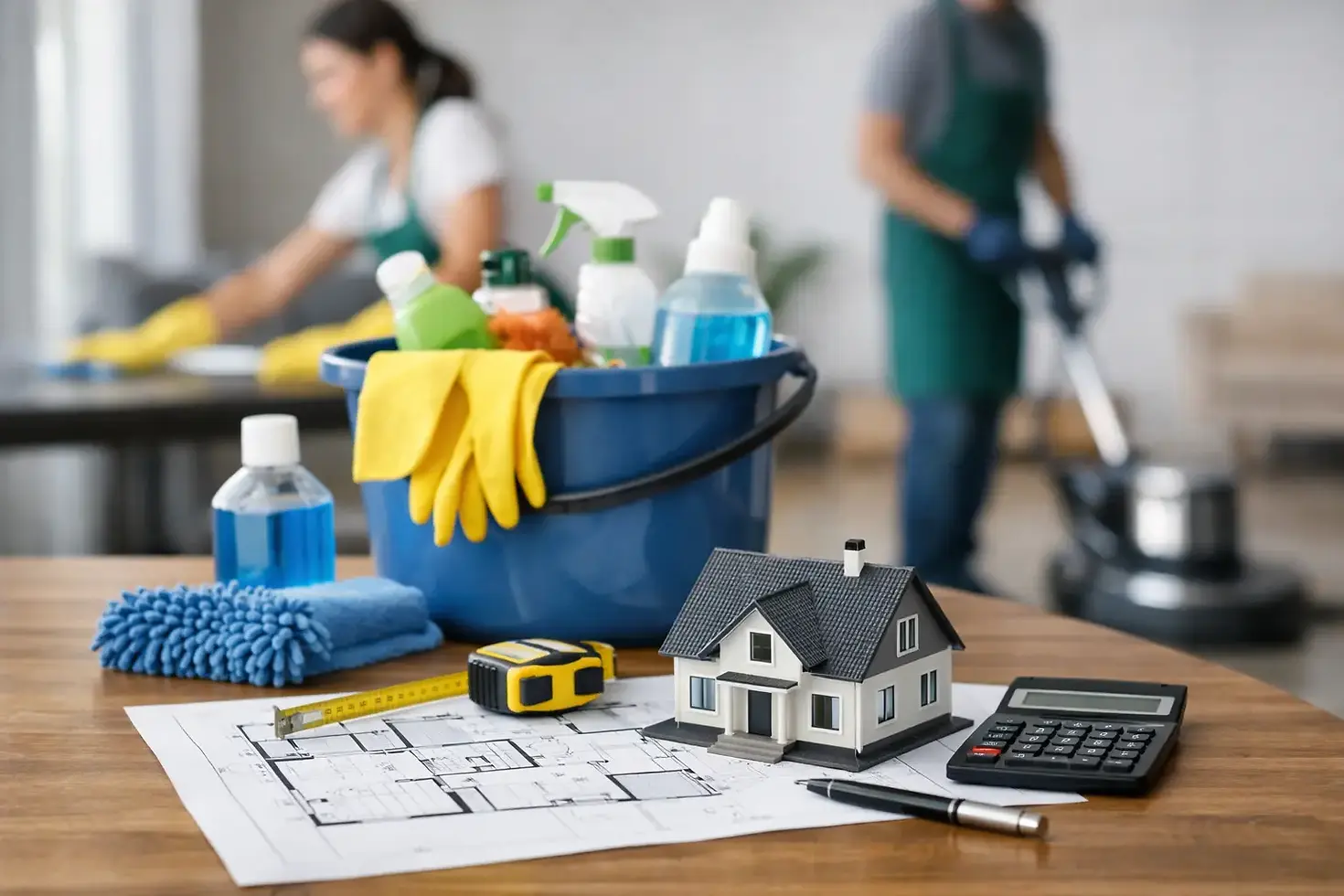
Square Footage Cleaning Cost Guide

If you are trying to price a house cleaning without wasting time on vague estimates, a square footage cleaning cost guide is the fastest place to start. For many Riverside homeowners and renters, square footage gives a clear baseline because it reflects how much home needs to be cleaned before details like condition, pets, and add-ons are factored in.
That said, square footage is a starting point, not the whole story. Two homes with the same size can take very different amounts of time depending on how often they are cleaned, how many people live there, whether there is pet hair, and whether the job is standard maintenance or a deeper reset. If you want a realistic idea of what you will pay, it helps to understand how cleaning companies use square footage and where extra cost usually comes from.
How a square footage cleaning cost guide works
Most residential cleaning companies use home size to build baseline pricing because it is one of the simplest ways to estimate labor. A larger home usually means more flooring, more surfaces, more rooms to maintain, and more time spent moving through the property carefully.
For recurring cleaning, square footage often works especially well because the home is being maintained on a regular schedule. In that case, cleaners are not spending as much time catching up on buildup. For deep cleaning, move-in cleaning, and move-out cleaning, square footage still matters, but the condition of the property carries more weight because the work is more detailed and time-intensive.
This is why transparent companies often start with a size-based rate and then adjust for service level. It keeps pricing more predictable for customers while still accounting for jobs that require extra labor.
What square footage usually includes in the price
When a company prices by home size, they are generally estimating the cleaning of the main living areas, bedrooms, bathrooms, and kitchen based on the level of service you booked. In a standard or recurring cleaning, that usually means dusting accessible surfaces, vacuuming and mopping floors, cleaning bathroom fixtures, wiping counters, and tidying visible areas.
A deep cleaning goes further. It often includes more detailed hand-wiping, more attention to buildup in kitchens and bathrooms, and extra time spent on areas that are easy to miss during routine maintenance. A move-in or move-out cleaning can also involve inside cabinets, baseboards, appliance exteriors, and more detailed preparation for a new occupant or final walkthrough.
The key point is that square footage covers the overall scope of the home, but not always every extra detail a customer may want.
What changes the final cost beyond square footage
This is where many customers get confused. A home may fit neatly into one size bracket, but the actual quote can still shift based on the amount of work inside that space.
The first factor is condition. If the home has not been professionally cleaned in a while, there may be soap scum, grease, dust buildup, or heavy floor soil that takes more time to remove. A 1,500-square-foot house in good shape can be much faster to clean than a 1,500-square-foot house that needs a full reset.
The second factor is frequency. Weekly or biweekly service usually costs less per visit than one-time cleaning because cleaners are maintaining the home instead of rebuilding it each time. Monthly service may land somewhere in the middle. If you wait longer between cleanings, buildup tends to increase, and pricing often reflects that.
The third factor is special requests and add-ons. Blinds, shutters, ceiling fans, kitchen cabinets, ovens, and pet-hair cleanup often carry separate charges because they require extra labor beyond baseline cleaning. These are not small details from a labor standpoint. Cleaning blinds thoroughly, for example, can take much longer than many customers expect.
Pets can also affect pricing even in otherwise well-kept homes. Pet hair sticks to upholstery, corners, stairs, and baseboards, and it usually adds time to both vacuuming and detail work.
Square footage cleaning cost guide by service type
A practical square footage cleaning cost guide should always separate service types because not every appointment is priced the same way.
Recurring cleaning
Recurring cleaning is usually the most cost-effective option on a per-visit basis. The home is serviced on a set schedule, so cleaners can focus on maintenance rather than deep buildup. If your main goal is to keep your house consistently clean without constant catch-up, this is often the best value.
For busy families and working professionals, recurring service also makes budgeting easier. Once the size of the home and visit frequency are set, pricing tends to stay more predictable unless you add specialty tasks.
Deep cleaning
Deep cleaning typically costs more than recurring service because it is more detailed. Even when a home is not heavily soiled, a deep clean requires extra time in bathrooms, kitchens, edges, fixtures, and hand-touched surfaces.
This service makes sense if you are starting regular service, catching up after a busy season, hosting guests, or simply trying to reset the home to a higher standard. In many cases, a company may recommend a deep clean first and then move you to recurring maintenance.
Move-in and move-out cleaning
Move-related cleaning is often priced differently because expectations are different. These jobs are more exacting, and customers usually want the property cleaned thoroughly for inspection, turnover, or a fresh start.
Even if the property is empty, that does not always make it cheaper. Empty homes can reveal more dust, wall marks, cabinet debris, and floor issues. Inside cabinets, appliance cleaning, and detail work around edges can increase labor significantly.
Why transparent pricing matters
Homeowners and renters are right to be cautious when pricing feels too vague. If a quote sounds low but does not explain what is included, it often leads to disappointment later. A size-based system helps create a clear baseline, but the best experience comes when the company also explains what can change the price.
That means understanding whether the quote is for standard cleaning or deep cleaning, whether add-ons are separate, and whether the home’s condition affects labor. Clear pricing is not just about the number. It is about knowing what you are paying for and what result to expect.
That is one reason many local customers prefer a straightforward model instead of a one-size-fits-all estimate. Motherhood Cleaning Services, for example, emphasizes baseline pricing by square footage because it gives customers a practical place to start without overcomplicating the booking process.
How to estimate your cleaning cost realistically
If you want a useful estimate before reaching out, start with the square footage of your home and be honest about the service level you need. If the home is cleaned regularly and generally stays in good condition, a maintenance rate may apply. If you are dealing with buildup, pet hair, or a move, expect the price to be higher than a basic recurring visit.
It also helps to think room by room about what matters most. If you want inside the oven cleaned, blinds wiped down, or cabinets detailed, mention that upfront. This saves time and leads to a more accurate quote.
Customers sometimes make the mistake of focusing only on the lowest number. That can backfire if the estimate does not include enough time to do the work properly. A realistic quote from the beginning usually means fewer surprises and better results on cleaning day.
When square footage is less useful
Square footage is helpful, but it is not perfect in every case. Homes with unusual layouts, multiple stairs, high clutter, or several lightly used rooms may not fit neatly into a basic formula. A small apartment with heavy buildup can cost more than a larger home that is already well maintained.
This is why the best pricing approach balances structure with flexibility. A company should be able to give a size-based baseline while still adjusting for real conditions inside the home. That protects both the customer and the cleaning team from mismatched expectations.
If you are comparing quotes, ask yourself one simple question: does this estimate reflect the actual work my home needs? A good square footage cleaning cost guide should make pricing easier to understand, not oversimplify it. When the quote is clear, the service level is defined, and any add-ons are spelled out, it becomes much easier to choose a cleaning plan that fits your home, your schedule, and your budget.
The most helpful estimate is the one that matches reality, because that is what leads to a cleaner home and a smoother experience from the start.



Comments