

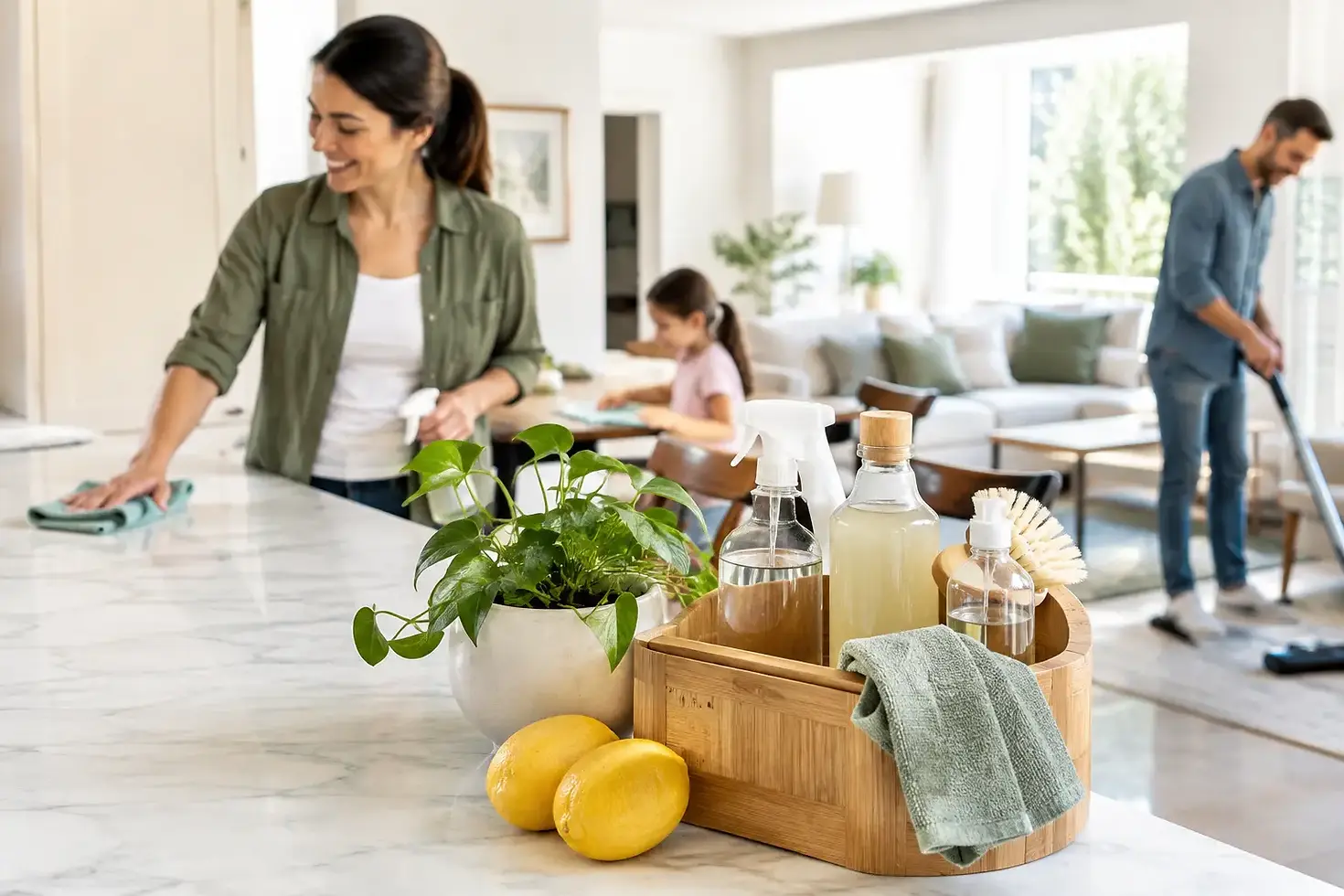
Eco Safe Home Cleaning Guide for Busy Families

A clean home should not leave behind a sharp chemical smell, irritated skin, or a cabinet full of products you do not trust around children and pets. This eco safe home cleaning guide gives Riverside households a practical way to reduce harsh cleaners while still handling the everyday messes that build up in kitchens, bathrooms, bedrooms, and high-traffic living areas.
Eco-friendly cleaning does not mean using one homemade mixture for every surface. It means choosing the right product and method for the job, using only what you need, and cleaning consistently enough that dirt and buildup never become a major project.
Start With Fewer, Better Cleaning Products
Many homes have separate sprays for counters, glass, floors, tubs, toilets, stainless steel, and furniture. That can make cleaning more expensive, cluttered, and confusing. A simpler approach is easier to maintain, especially when you are fitting chores around work, school pickups, pets, and weekend plans.
For most routine cleaning, keep a small set of safer products on hand: a gentle all-purpose cleaner, dish soap, a bathroom cleaner appropriate for your surfaces, glass cleaner, a toilet bowl cleaner, and fragrance-free laundry detergent if sensitivities are a concern. Look for clear instructions and products designed for the surface you are cleaning. “Natural” on a label is not always the same as low-irritant, biodegradable, or safe for every material.
Fragrance is another consideration. Some families prefer scented products because a fresh smell signals that the home is clean. Others need fragrance-free options because of allergies, asthma, migraines, babies, or pets. There is no single right choice, but using less fragrance can make a noticeable difference in enclosed rooms like bathrooms and bedrooms.
Eco Safe Home Cleaning Guide: Room by Room
The most effective eco-conscious routine is based on maintenance. When crumbs, soap residue, and dust are removed regularly, you can use gentler products and less scrubbing power.
Kitchen: Clean Food Areas First
Kitchen counters need frequent attention because they collect food particles, spills, and germs. Remove items from the counter, wipe away crumbs, then clean with a product suitable for the counter material. Granite, marble, and other natural stone need special care. Acidic ingredients, including vinegar and lemon juice, can dull or etch some stone surfaces, so do not assume a homemade solution is safe.
For everyday greasy spots on the stovetop, warm water and a little dish soap often work well. Let the solution sit briefly before wiping rather than scrubbing aggressively. This saves time and helps protect the finish. For baked-on oven grease, use a cleaner made for ovens and follow the label directions carefully. Heavy buildup may require a stronger product or professional service, even in an eco-conscious home.
Do not forget handles, refrigerator doors, cabinet pulls, faucet levers, and the microwave keypad. These are small touchpoints that get missed during a quick wipe-down. A reusable microfiber cloth can pick up dust and grime effectively with less product than paper towels.
Bathroom: Control Moisture Before It Becomes Buildup
Bathrooms need regular cleaning, but moisture management does much of the work. Run the exhaust fan during showers, hang damp towels to dry, and wipe standing water from shower walls when possible. These simple habits reduce soap scum and mildew conditions between cleanings.
Use a bathroom cleaner matched to the material in your shower, tub, sink, and tile. A gentle cleaner may be enough for weekly maintenance, while hard-water deposits often need a more targeted product. Riverside-area homes can experience mineral buildup depending on water conditions, so a product that works well for one household may not be enough for another.
For toilets, use a dedicated toilet bowl cleaner and a separate brush. Clean the handle, seat, lid, and exterior with a disinfecting product when someone in the household is sick or when the bathroom gets heavy use. Never mix cleaning products, especially bleach with ammonia, vinegar, acids, or products with unknown ingredients. Mixing cleaners can create dangerous fumes.
Living Areas and Bedrooms: Focus on Dust and High-Touch Spots
Dust is not just cosmetic. It can hold pet dander, pollen, and other irritants that make a home feel less comfortable. Work from high to low: ceiling fans and shelves first, then furniture, then floors. This prevents you from cleaning the same area twice.
Vacuum rugs, upholstered furniture, and pet areas regularly, particularly if someone has allergies or pets shed heavily. A vacuum with a well-maintained filter can make a real difference. If you use reusable dust cloths, wash them separately from heavily soiled items and skip overly scented fabric products if household members are sensitive to fragrance.
For hard floors, use the least amount of water and cleaner needed for the floor type. Too much water can damage wood, seep into seams, and leave residue behind. A lightly damp microfiber mop is usually more practical than soaking the floor.
Use Disinfectants When They Make Sense
Cleaning and disinfecting are not the same thing. Cleaning removes visible dirt and many germs from a surface. Disinfecting uses a product intended to kill certain germs, but it only works when the surface is cleaned first and the product stays wet for the required contact time.
You do not need to disinfect every inch of your home every day. Reserve it for situations that call for it: illness in the household, bathroom surfaces, kitchen areas after handling raw meat, diaper-changing areas, and high-touch surfaces during cold and flu season. For routine dust and food messes, regular cleaning is usually the more practical choice.
Read the product label before using any disinfectant. More product is not better, and spraying a surface then immediately wiping it dry may not give it time to work. Keep all cleaning products out of reach of children and pets, even products marketed as plant-based or environmentally friendly.
Make Reusables Work Without Spreading Germs
Reusable tools can reduce waste, but only when they are cleaned and used correctly. Keep separate cloths for the kitchen, bathrooms, and general dusting. Color-coding makes this easy and helps prevent using a cloth from the bathroom on a kitchen counter by mistake.
Wash microfiber cloths after use or whenever they are visibly soiled. Avoid washing them with items that shed lint, and avoid using excessive fabric softener, which can reduce their ability to pick up dirt. Replace worn sponges regularly. A sponge that smells unpleasant or stays dirty after rinsing is no longer helping your cleaning routine.
Paper towels still have a place for raw meat spills, pet accidents, and other messes you do not want to launder. The goal is not perfection. It is making lower-waste choices where they are realistic and sanitary.
Build a Schedule You Can Actually Keep
A cleaning plan only works when it fits your household. A busy family may do better with 10 to 15 minutes of daily upkeep and one longer weekly reset. A renter preparing for a move may need a more detailed plan focused on appliances, cabinets, baseboards, blinds, and floors.
Daily upkeep can include loading the dishwasher, wiping counters, cleaning up pet hair, and doing a quick bathroom sink wipe. Once a week, handle bathrooms, vacuuming, mopping, bedding, and dusting. Monthly tasks may include ceiling fans, cabinet fronts, blinds, shutters, and the inside of the refrigerator.
For deep cleaning, move-in cleaning, or move-out cleaning, eco-friendly options can still be thorough. The key is allowing enough time for neglected areas and choosing products based on the surface and soil level. Motherhood Cleaning Services can provide environmentally friendly cleaning options for Riverside households that want professional help without adding another task to an already packed schedule.
A safer cleaning routine does not have to be complicated. Keep your products simple, use the right cleaner for the surface, clean often enough to prevent buildup, and ask for help when the job is bigger than the time you have available. A comfortable, well-kept home is easier to maintain when the routine works for real life.


Comments